
Quick answer
| Best overall | Pack light enough to move easily, but include water, sun protection, snacks, phone power, and a plan for wet or overwhelmed kids. |
|---|---|
| Best low-stress choice | Use one park bag for essentials and keep hotel backup supplies ready for rest days and laundry. |
| Best for space | Large families should assign categories by bag instead of letting every person carry duplicate items. |
| Best without a car | Car-free families need more careful bag planning because returning to a parked car is not an option. |
| Main caveat | Always check current park bag, stroller, food, and security rules before relying on any packing list. |
Theme park day bag essentials
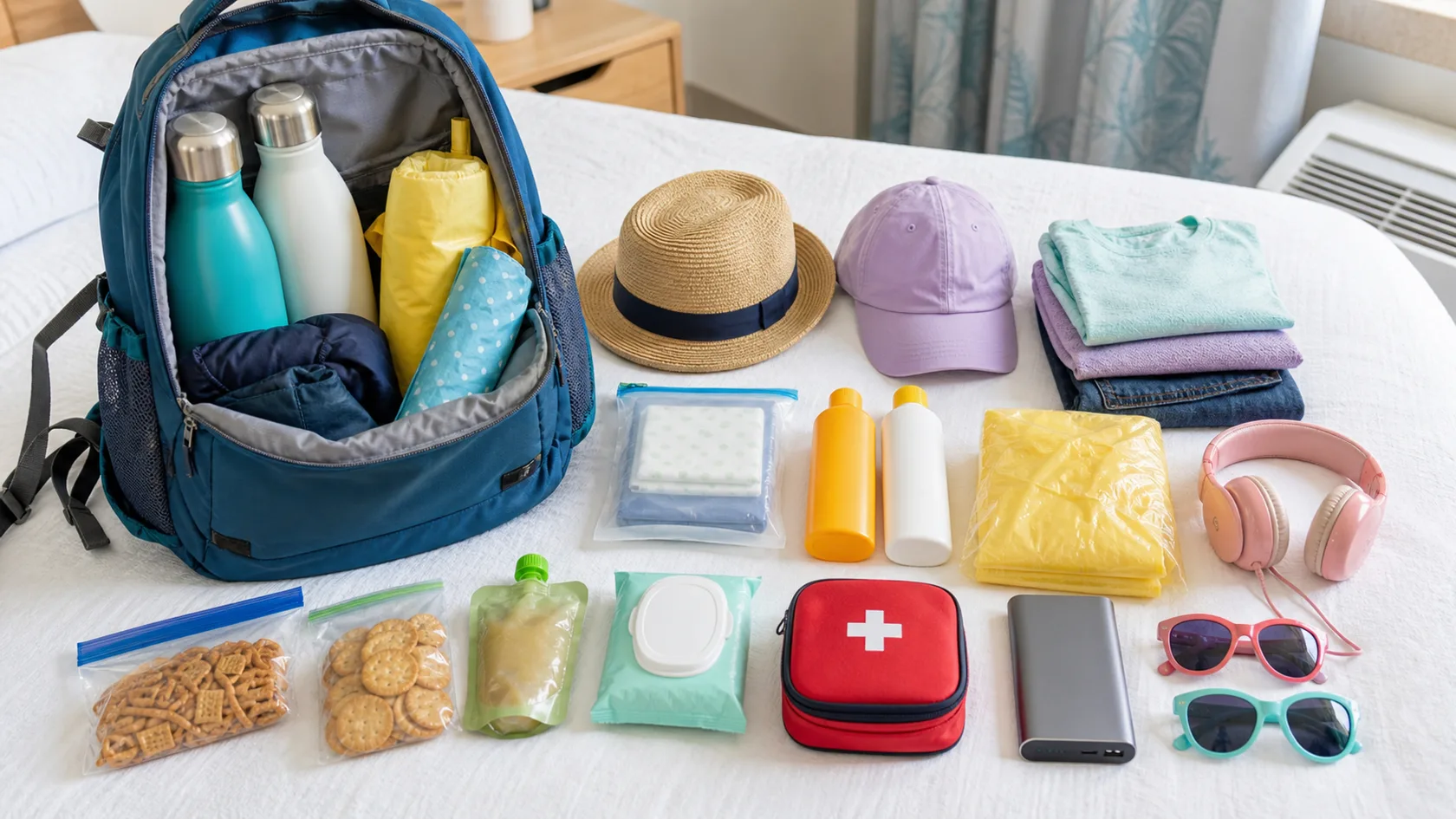
The best park bag solves predictable problems without becoming a burden. Heat, hunger, wet clothes, phone battery, bathroom accidents, and long waits are the usual stress points.
If you are planning Disney or SeaWorld days, also build the bag around your exit plan. The items you need for a half-day with a hotel break may be different from a full day with fireworks.
- Water bottles or a reliable refill plan.
- Sunscreen, hats, sunglasses, and lightweight layers.
- Snacks that your children already tolerate well.
- Phone battery pack and charging cable.
- Small first-aid basics and any family-specific supplies.
- Ponchos or compact rain jackets.
- Wipes, hand sanitizer, and a change of clothes for younger kids.
Toddler and stroller packing
For toddlers, packing is mostly about transitions. Think stroller comfort, snacks, shade, spare clothes, and the ability to leave quickly without searching through three bags.
If toddler pacing is the main trip concern, read Orlando with toddlers before finalizing park days and hotel plans.
| Need | Pack | Why it helps |
|---|---|---|
| Heat | Hat, fan if your family uses one, sunscreen, water. | Reduces heat stress during waits and walks. |
| Naps | Stroller comfort item, light blanket if allowed, quieter break plan. | Makes a flexible rest easier. |
| Meals | Known snacks, simple utensils, wipes. | Avoids relying on unfamiliar food during a hard moment. |
| Accidents | Spare clothes and sealable bags. | Keeps one problem from ending the whole day. |
Sensory-aware packing
Sensory-friendly packing is not medical advice, and every child is different. The goal is to bring tools your child already uses successfully, not to test new strategies in a crowded park.
For a broader planning framework, use the sensory-friendly family travel checklist before departure.
- Headphones or ear protection if your child already uses them.
- Preferred snacks and backup food options.
- A small comfort item that is easy to secure.
- Sunglasses, hat, or other light-management tools if useful.
- A written break or exit plan for adults in the group.
What to keep at the hotel
Do not carry every backup item into the park. Keep a hotel kit for laundry, medicine cabinet basics, extra shoes, recovery snacks, and rest-day clothes.
The hotel can either support the packing plan or make it harder. A room with a fridge, laundry access, breakfast, or separate sleep space can reduce what your family needs to carry each day.
Family fit matrix
| Family type | Fit | What to watch |
|---|---|---|
| Toddlers | Good planning tool | Spare clothes, stroller comfort, snacks, naps, and rain. |
| Sensory-sensitive kids | Good when personalized | Only pack tools your child already tolerates. |
| Grandparents | Good | Medication, shade, water, seating breaks, and lighter bags. |
| Large families | Good with bag roles | Duplicate items, bag weight, and who carries what. |
| No-car families | Important | No easy car backup, so hotel and bag planning matter more. |
Planning checklist
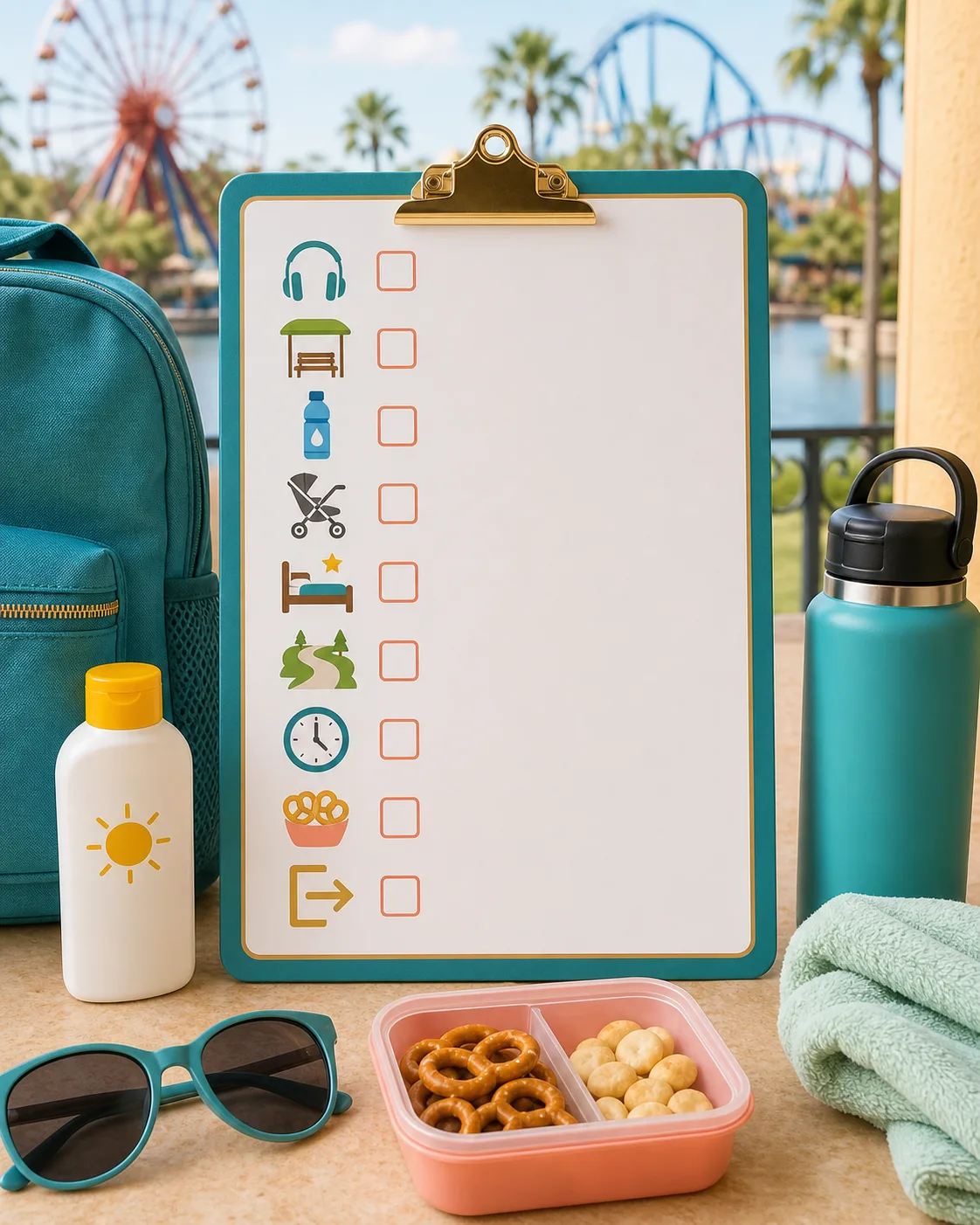
- Check current official bag, stroller, food, and security rules for each park.
- Pack one essential bag and one hotel backup kit.
- Keep water, sunscreen, snacks, and phone power easy to reach.
- Assign one adult to documents, tickets, IDs, and payment backup.
- Pack fewer toys and more transition helpers.
- Bring only sensory tools your child already uses successfully.
- Review the next day's weather before repacking the bag each night.
Official resources to check
FAQ
What should families pack for Orlando theme parks?
Most families should prioritize water, sun protection, snacks, phone power, rain gear, wipes, and child-specific comfort or medical items. Check each park's current rules before packing.
Should families bring a stroller to Orlando parks?
Many toddler and preschool families benefit from a stroller, but rules and size limits can vary. Confirm current park policies and consider how you will handle buses, shuttles, and stroller parking.
What should sensory-sensitive families pack?
Pack tools your child already uses, such as headphones, known snacks, sunglasses, comfort items, or written routines. Avoid testing new sensory tools for the first time in a crowded park.
How much should families carry into the park?
Carry enough to solve likely problems, but not so much that the bag becomes another stress point. Keep bulkier backups at the hotel when you have a realistic return plan.
Related guides
- Family travel resources hub
- Orlando with toddlers
- Disney World midday break strategy with kids
- Sensory-friendly family travel checklist
- Family hotel booking checklist
Bottom line
A good Orlando packing list makes the hard moments easier: heat, hunger, waits, rain, tired children, and the decision to leave early.