
Quick answer
For many sensory-sensitive kids, the best first Orlando park is not the biggest or most famous one. SeaWorld can be a gentler starting point for some families because shows create natural seated breaks. EPCOT can work for some families who prefer slower attractions and more open movement, but it can still involve long walks, crowds, and loud moments. Magic Kingdom and Universal can be rewarding but often need tighter planning around queues, noise, crowds, and exits.
If sensory load is a major concern, choose the hotel and break plan before buying tickets. A quiet room setup, short return path, and flexible cancellation terms may reduce more stress than squeezing in another park day.
Best starting points by sensory need
| Family priority | Consider first | What to verify |
|---|---|---|
| Seated breaks | SeaWorld or a show-heavy, slower day. | Show volume, show length, shaded exits, and crowd flow after shows. |
| Lower ride pressure | EPCOT-style slower attractions or a partial park day. | Walking distance, festivals, nighttime crowds, and indoor sensory details. |
| Strong character interest | Magic Kingdom or Disney parks with a strict break plan. | Queue tolerance, fireworks, parades, transportation, and midday exit options. |
| Older kids who love immersive worlds | Universal only if the child wants the themes enough to justify intensity. | Dark queues, loud effects, motion rides, crowd density, and exit plan. |
| Recovery time matters most | A nearby suite hotel, quiet hotel, or fewer park days. | Room layout, hallway noise, shuttle timing, parking, and cancellation terms. |
Official booking links to compare
These are official merchant links, not affiliate tracking links yet. For this research-stage sensory guide, hotel comparison links are the main CTAs because most families need time between research and booking. SeaWorld is included as a secondary official park link for families already checking current details.
| Provider | Best use | Official link |
|---|---|---|
| Expedia | Compare Orlando family hotels near the parks you are considering. | Compare Expedia Orlando hotels |
| IHG | Check practical family hotel brands, suite-style stays, and longer-cookie hotel options. | See IHG Orlando hotels |
| Priceline | Secondary comparison for hotel and travel options. | Compare Priceline travel options |
| SeaWorld Orlando | Official park details for families already comparing a SeaWorld day. | Check SeaWorld official site |
Who this guide is for
This guide is for parents and caregivers choosing Orlando theme parks for a child who may be sensitive to noise, crowds, heat, queues, transitions, changes in routine, or long days. It is also useful for families with toddlers, grandparents, siblings with different needs, and limited tolerance for full open-to-close park days.
It is not a medical recommendation and does not replace official accessibility information. Use it to shortlist parks and trip formats, then confirm current policies and attraction details with the official provider.
Who should start with fewer park days
If your child is easily overloaded by crowds, heat, noise, or unpredictable waits, start with fewer park days and a stronger hotel plan. A three-park trip with no recovery time can be harder than one carefully chosen park plus rest days.
Park comparison
| Park or park type | Why it may work | Sensory watchouts |
|---|---|---|
| SeaWorld Orlando | Shows and exhibits can create natural seated breaks and flexible pacing. | Loud shows, crowd movement after shows, heat, coaster noise, and unpredictable animal viewing. |
| EPCOT-style day | Some slower attractions, open areas, and flexible touring may help. | Long walking distances, festivals, evening crowds, fireworks, and limited quick exits from some areas. |
| Magic Kingdom | Strong appeal for many kids and many familiar attractions. | Heavy crowds, parade and fireworks noise, stroller congestion, queues, and transportation complexity. |
| Universal Orlando | Can be worth it for older kids with strong interest in the themes. | Immersive queues, dark spaces, motion rides, loud effects, and dense walkways. |
| Discovery Cove-style day | Reservation-based capacity and slower pacing may appeal to some families. | Water comfort, animal interactions, schedule constraints, safety rules, and higher upfront cost. |
| Hotel pool or rest day | Often the lowest-pressure day and a useful reset between park days. | Pool music, crowds, hallway noise, and overstimulation at busy resort pools. |
Decision criteria before buying tickets
Noise and sudden sound
Fireworks, parades, coaster launches, indoor show effects, and crowd reactions can be harder than ordinary background noise. Check official sensory or accessibility details where available, and bring headphones if your child uses them.
Exit flexibility
Some attractions, shows, and queues are easier to leave than others. For a sensory-sensitive child, the ability to exit calmly can matter more than the attraction itself.
Walking and transportation
Long walking distances and complicated exits can make breaks harder. Consider whether your family can return to the hotel during the day, whether parking is simple, and whether shuttle schedules fit your child's rhythm.
Hotel recovery space
A quiet room, separate sleep space, fridge, simple breakfast, and predictable transport can make a park trip more manageable. Compare quiet hotels near Disney World for families before booking a high-pressure itinerary.
Family fit matrix
| Family type | Better starting point | Watchouts |
|---|---|---|
| Toddlers | Short park blocks, stroller breaks, and hotel recovery time. | Heat, naps, fireworks, long waits, food timing, and transitions. |
| Sensory-sensitive kids | One carefully chosen park day with a clear break and exit plan. | Noise, crowds, queues, sudden effects, and post-show crowd movement. |
| Grandparents | Lower-walking days, seated shows, accessible routes, and nearby hotels. | Heat, walking distance, long exits, and complicated transport. |
| Large families | Split plans, clear meeting points, and suite or rental lodging. | Different sensory needs, ride preferences, meal costs, and group fatigue. |
| No-car families | Hotels with reliable transport or rideshare access. | Shuttle gaps, late returns, overstimulated exits, and grocery access. |
Sensory load notes
Treat every sensory score or park ranking as a starting hypothesis, not a promise. A child who loves marine animals may handle SeaWorld better than a child who dislikes loud shows. A child who loves a specific movie world may tolerate Universal better than a calmer-looking park. Interest can offset stress, but it does not erase heat, noise, queues, or exhaustion.
Build a "leave while it is still okay" rule. Many families wait until the child is already overloaded, then face a long exit, parking lot, or shuttle ride. A planned early exit can preserve the rest of the trip.
Planning checklist
- Choose one main park priority and one backup option.
- Check official accessibility information before buying tickets.
- Identify at least two break locations before arriving.
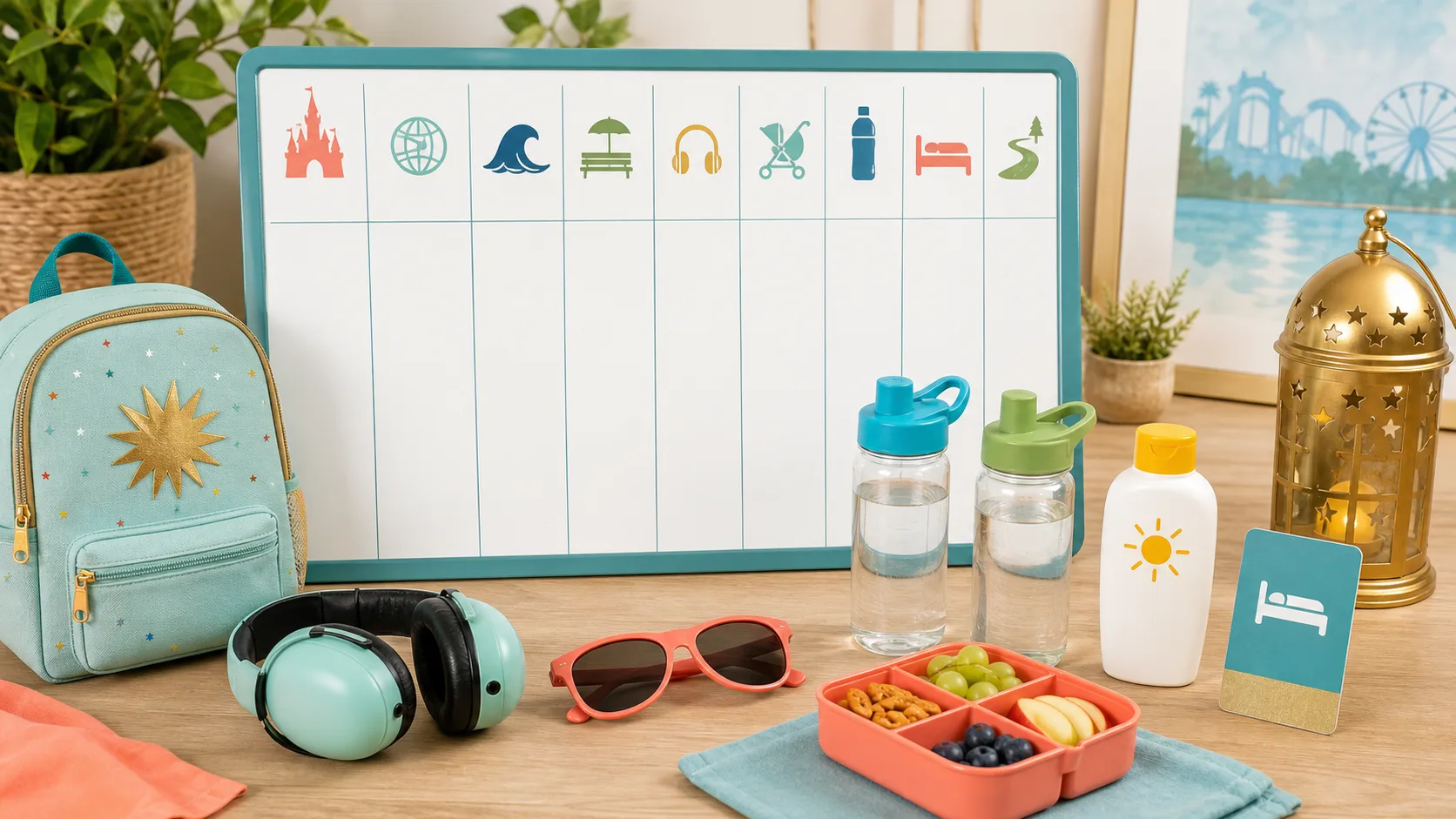
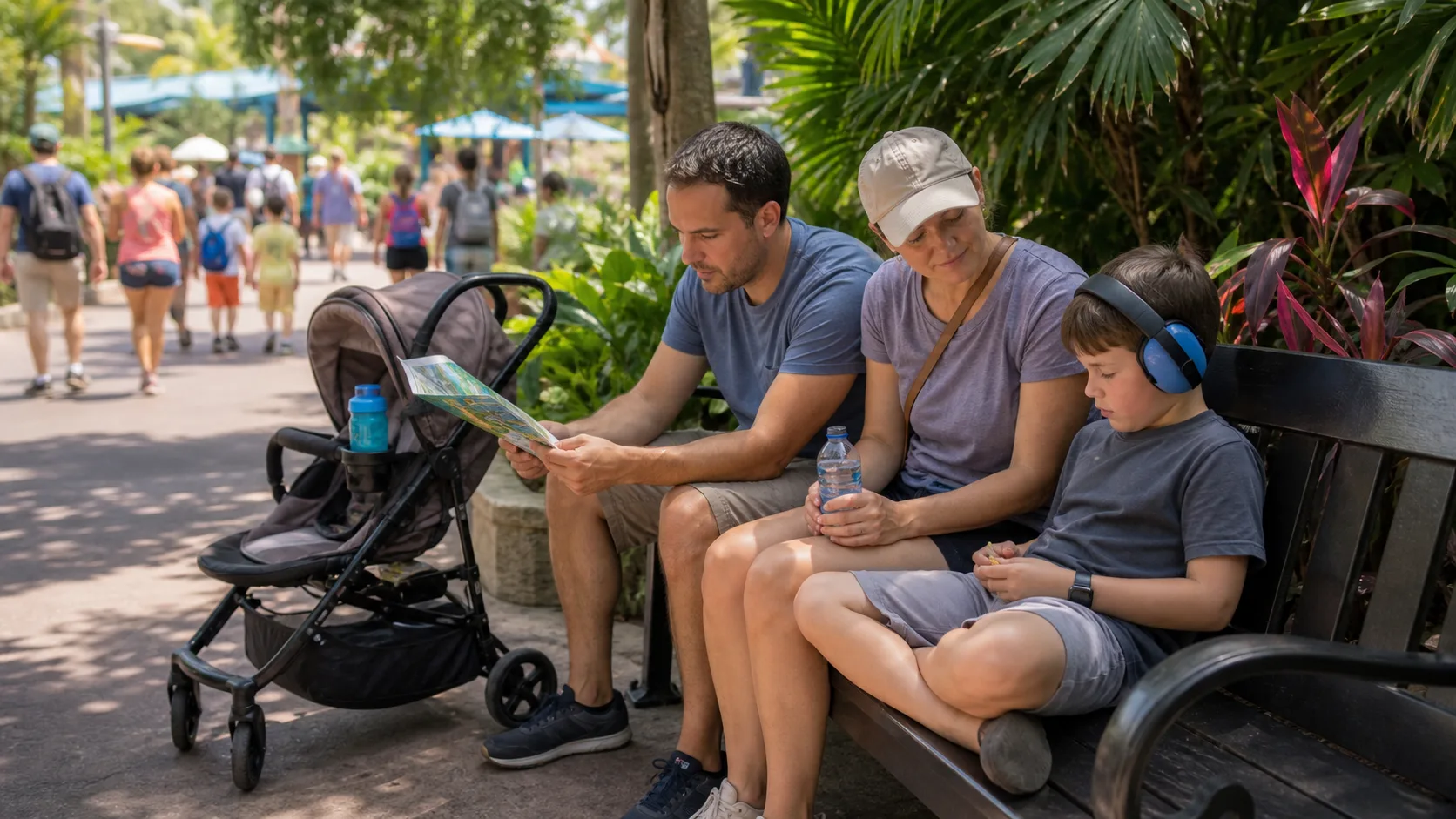
- Pack headphones, sunglasses, water, snacks, sunscreen, and comfort items if your child uses them.
- Decide what signs mean your family should leave early.
- Compare hotel room layout, hallway noise, breakfast crowding, parking, and shuttle timing.
- Build a rest day after the highest-pressure park day.
- Keep expectations flexible if weather, crowds, or attraction availability change.
Official resources to check
- Walt Disney World accessibility resources for current Disney guest services and accessibility information.
- Walt Disney World cognitive disabilities services for current planning details related to cognitive disabilities.
- Universal Orlando accessibility information for current Universal guest policies and attraction accessibility details.
- SeaWorld Orlando accessibility information for current SeaWorld guest policies.
FAQ
What is the best Orlando theme park for sensory-sensitive kids?
There is no single best Orlando theme park for every sensory-sensitive child. SeaWorld can be easier for some families because shows create natural seated breaks. EPCOT can work for some families who prefer slower attractions and more open walking areas, but it can still be loud and crowded. Magic Kingdom, Universal, and other parks can be wonderful for the right child but may require more planning around crowds, queues, sound, and exits.
Is Disney World sensory-friendly?
Disney World offers official accessibility resources and planning tools, but no park is automatically sensory-friendly for every child. Families should check current Disney accessibility information, identify quiet break areas, plan fewer attractions, and choose a hotel setup that allows recovery time.
Is SeaWorld Orlando good for sensory-sensitive kids?
SeaWorld Orlando can be a good fit for some sensory-sensitive kids because families can build the day around shows, exhibits, snacks, and seated breaks. It can also be difficult because shows may be loud, crowds move suddenly after performances, and heat still matters. Check current SeaWorld accessibility information and show schedules before going.
Is Universal Orlando hard for sensory-sensitive kids?
Universal Orlando can be harder for some sensory-sensitive kids because of intense ride queues, immersive effects, darker environments, loud sound, and crowd density. It can still work for families with older kids who love the themes and can use a strong break plan. Review Universal accessibility information and attraction details before choosing it.
Should sensory-sensitive families stay close to the parks?
A close hotel can help if your family needs midday breaks, short exits, or a predictable recovery space. Distance is not the only factor, though. Room layout, hallway noise, breakfast crowding, parking, shuttle timing, cancellation rules, and pool noise can matter just as much.
Related guides
- Sensory-friendly Orlando hub
- Orlando with a sensory-sensitive child
- Orlando with toddlers
- Disney World midday break strategy with kids
- SeaWorld Orlando with kids
- Disney World vs SeaWorld for families
- Quiet hotels near Disney World for families
- Orlando family packing list
- Sensory-friendly family travel checklist
Bottom line
The best Orlando theme park for a sensory-sensitive child is the one your family can leave, pause, simplify, and recover from. Choose fewer priorities, verify official accessibility details, and protect the hotel recovery plan.